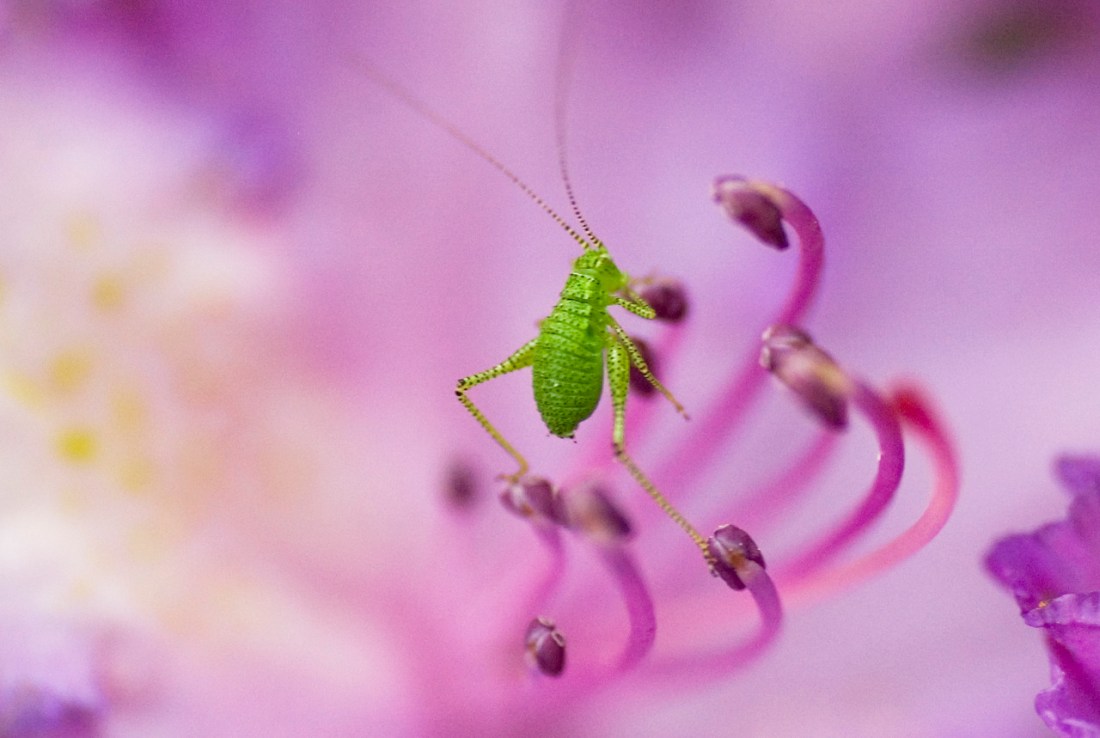
Bed of nails
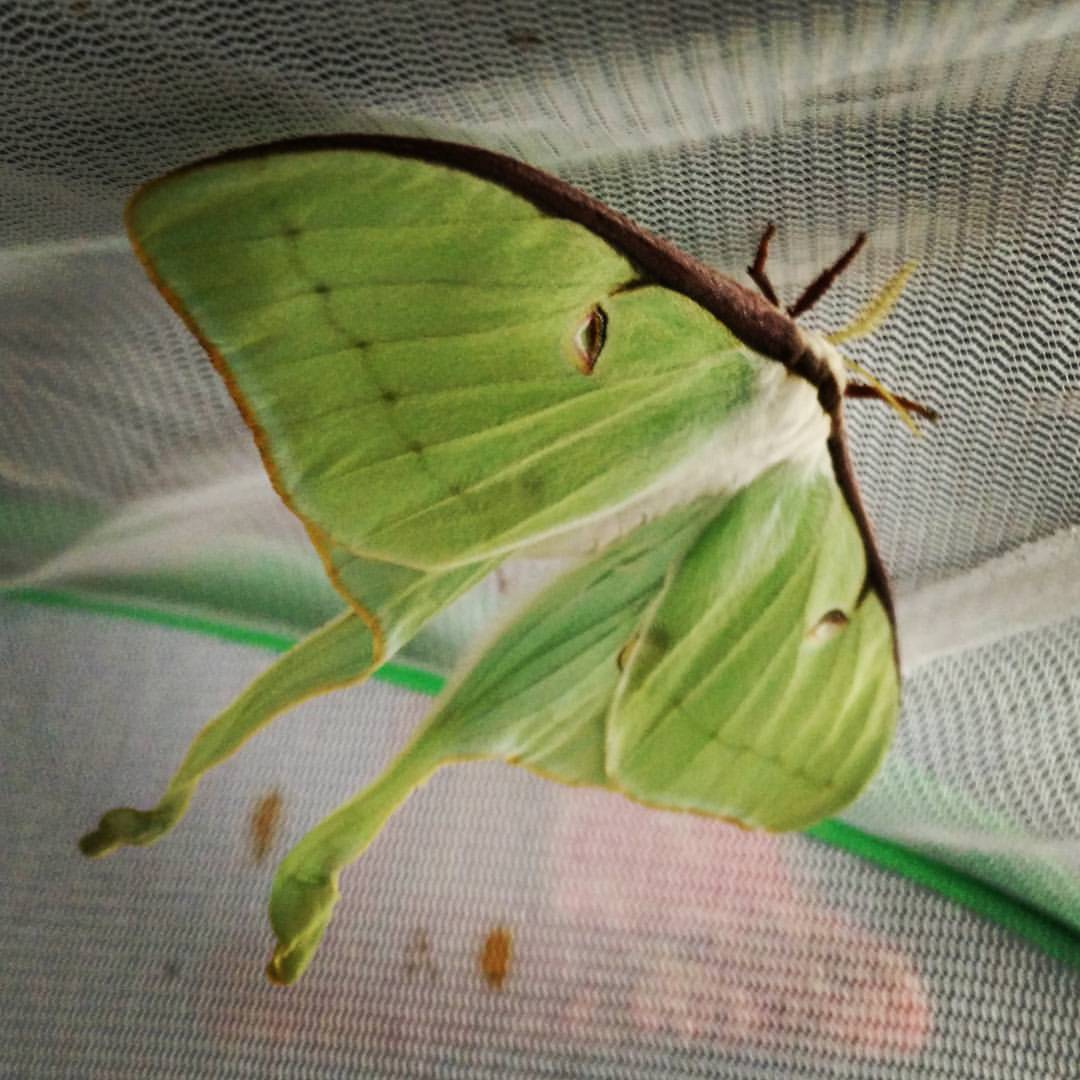
My moth babbys are hatching, but it’s still way too cold to let them go 😦 #lunamoth #moth #silkmoth #insect #bugs
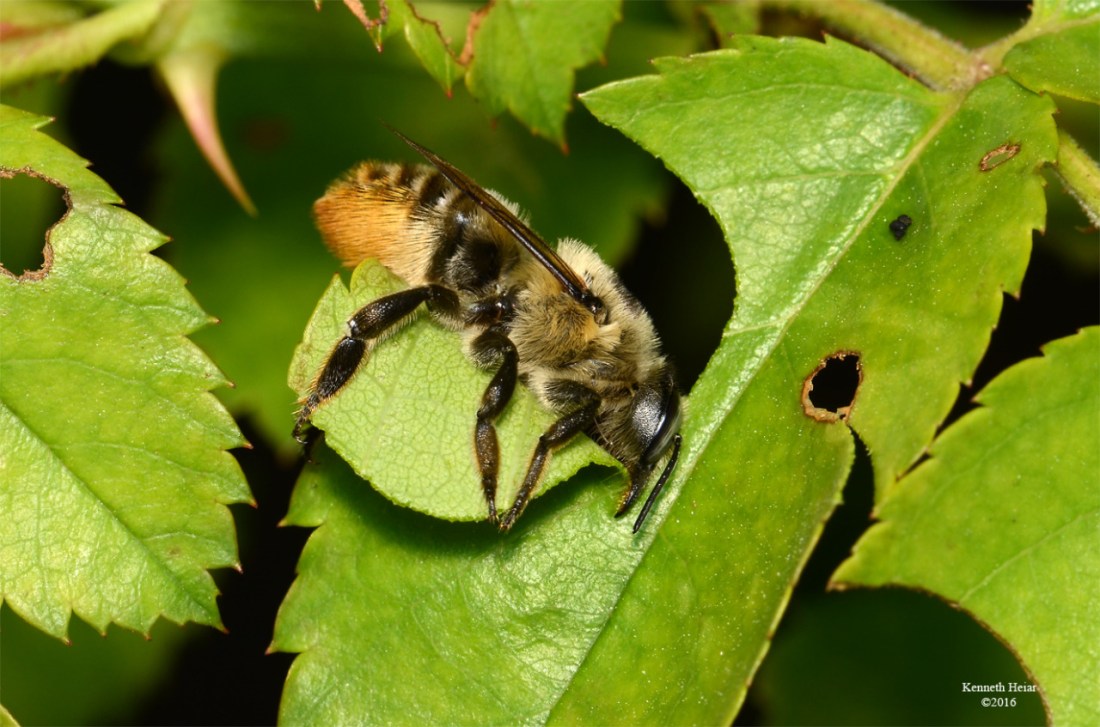
I was fortunate to witness this Leaf-cutter Bee (Megachile sp.) at the Cedar Valley Arboretum and Botanic Gardens at Hawkeye Community College in Waterloo, Iowa around 6:00 pm today, as it carved several oval leaf segments from a rose plant. The small bee uses these cuttings to raise its young. She stacks them in a small hole, wrapped much like a cigar, where placed inside are an egg and some pollen for the larvae to eat after the hatch occurs.

A quick little guide I just drew for fun – I’m not really anal about this, it’s normal to simplify animal anatomy in cartoons and caricatures. If your intent is to portray a mantis accurately, however, it’s important to remember it has “hands!” The vast majority of mantids in art realistic and otherwise simply end the foreleg with the tibia, like an organic scythe, which is cool, but it’s not quite what they have.
Here’s a photo where you can more clearly see the leg structure (photographed by this person!)
A mantis usually stands, walks and climbs with all six tarsi!

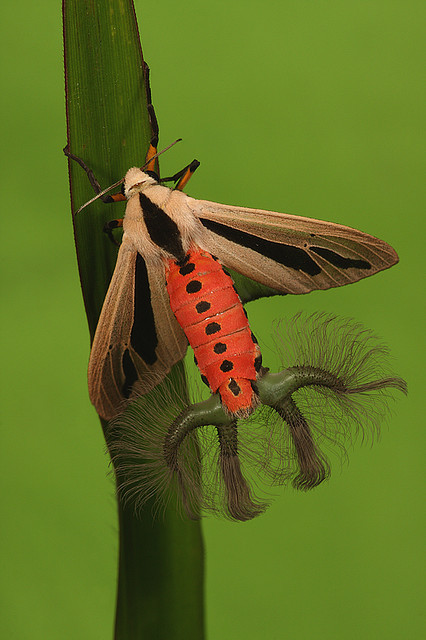
Moth – Creatonotos gangis
What you see in this photo is a male of Creatonotos gangis (Arctiidae), a species of Asian moth, showing his expanded pheromone diffuser structures at the tip of the abdomen (called coremata and androconia). The four coremata are reversible, each when inflated may be longer than the abdomen.
Females pheromonally attract males from long distances, however, when the male is close enough to begin his courtship, he inflates his coremata with air or hemolymph to evert externally from the abdomen and fans pheromones of his own towards the female.
This species of moth is found over much of south-east Asia, as well as in Australia.
Photo credit: ©Darren5907 | Locality: unknown (2009)
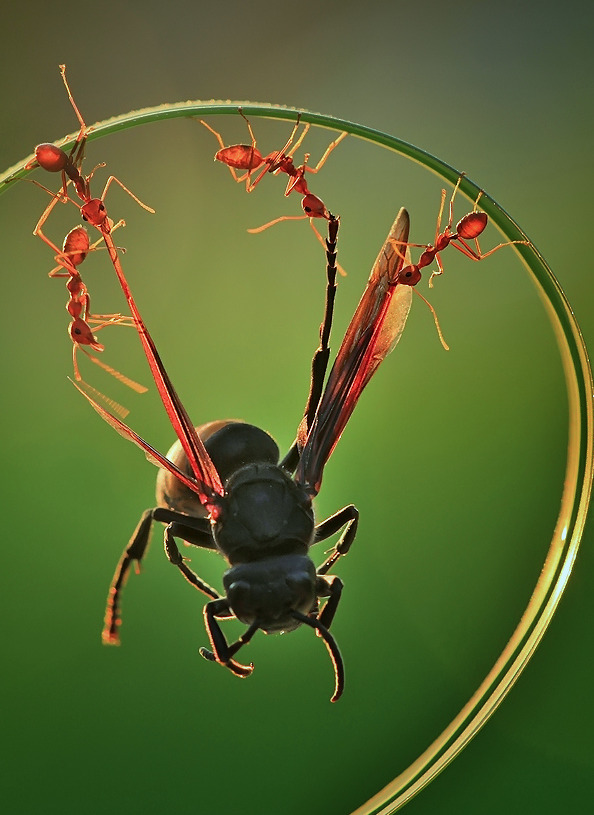
Ants are excellent collaborators with others in their colony. Because they have the same biological urges (like following a trail of pheromones to food, then carrying the food home), ants will instinctually work together to accomplish larger tasks at hand.
Image credit: Uda Dennie

Some species of ants are active aphid-farmers. Worker ants use their antennae to stimulate the livestock into secreting honeydew. This “milking” provides sugar-rich meals for the ant colony. In turn, the ants manage aphid nurseries, carry adult aphids to fresh pastures, and protect the entire flock from predators.
Image: Ganesh H. Shankar

Holy shit what is this??
Looks like a devil’s flower mantis, which come in many colors and patterns depending on where they live.
Idolomantis diabolica
Is a mini starship – probly has faeries aboard. treat gently.
this is a max level mantis in full raid gear

 Cakes & Medicine